「訪談」Bona Obiri-Yeboah 與他的書店 Non-Aligned Books (zh/en)
經歷了2025 年 雅加達 Press Print Party、2026年 日惹藝術書展,兩趟印尼的書旅之後,我滿懷文化衝擊的返台,陷入了深深的卡頓。對印尼的初次了解,在首都雅加達發生;在日惹受到的衝擊,則深入文化及城鄉差異。
雅加達 Press Print Party 現場,全印尼的獨立出版、藝術書店聚集,其中遠在峇里島的出版社 Cahyati Press,在書展後旋即在雅加達市區內舉辦了2場打書的活動,包含讀詩會、數名作者的書集發表會。活動皆是高朋滿座,足以見證印尼創作者對社群及自出版的重視。他們前往了澳洲繼續打書,支持其迦納裔澳洲籍作者,也是今日訪談的主人翁Bona Obiri-Yeboa。
在日惹,書展、藝術季與雙年展蓬勃發展之地,我親身體會到近年印尼藝術共同體(collective)提出的兩個重要概念:「共享(Lumbung)」與「相聚(Nongkrong)」。前者強調共享資源,後者則重視沒有特定目的的相聚——一起聊天、吃飯、討論,在看似沒有生產力的日常裡,慢慢建立信任、交換知識,最後孕育新的合作與創作。
這些概念與強調階級競爭、資源掠奪的現代資本主義社會完全相反,正是印尼藝術工作者的生活方式。身處華人文化底下的資本社會許久,早已把自己放入比較與競爭的循環,印尼讓我理解,我可以重新做選擇。
Bona Obiri-Yeboa 同樣地,因自出版與印尼結緣,與 Cahyati Press 踏上了印尼大大小小的島嶼,甚至受到啟發回到澳洲開了一間書店:Non-Aligned Books 。Bona 也是詩集《Ruminations 反芻》(2024)的作者,我在雅加達 Press Print Party 因攤位臨近而熟識的作者之一。
雙雙返國後,印尼帶給我們的影響持續將我們繫起,並有了此次訪談的機緣。很可惜的是,在訪談文章發表之際,Non-Aligned Books 因面臨其實體空間遭惡意隱瞞作為商業販售利用的違法性,無法繼續營運,將會暫時關閉。
「但我們依然對未來充滿希望,因實體空間僅是 Non-Aligned Books 的其中一個面向,Non-Aligned Books 是理念 (concept)、是社群 (community)、是藏書系列 (collection)、也是支持他自身一切得以成立的信念(conviction)。」
在閉店之際提出的這4C,也像一劑強心針,打在每個獨立出版實踐者的身上、打在在大環境底下辛勤生活、保持希望的你我身上。
此次訪談,我們將一窺 Bona 的青少年時期,也將知道他的離散身分、求學歷程與印尼的出版之旅是如何影響他。給 to_ press 好奇寶寶們的 10(萬)個為什麼,馬上展開。
嗨,Bona!先和我們介紹一下你自己,也聊聊 Non-Aligned Books 吧!你正在打造的是一個什麼樣的空間?你希望它未來成為什麼樣子?
你好!
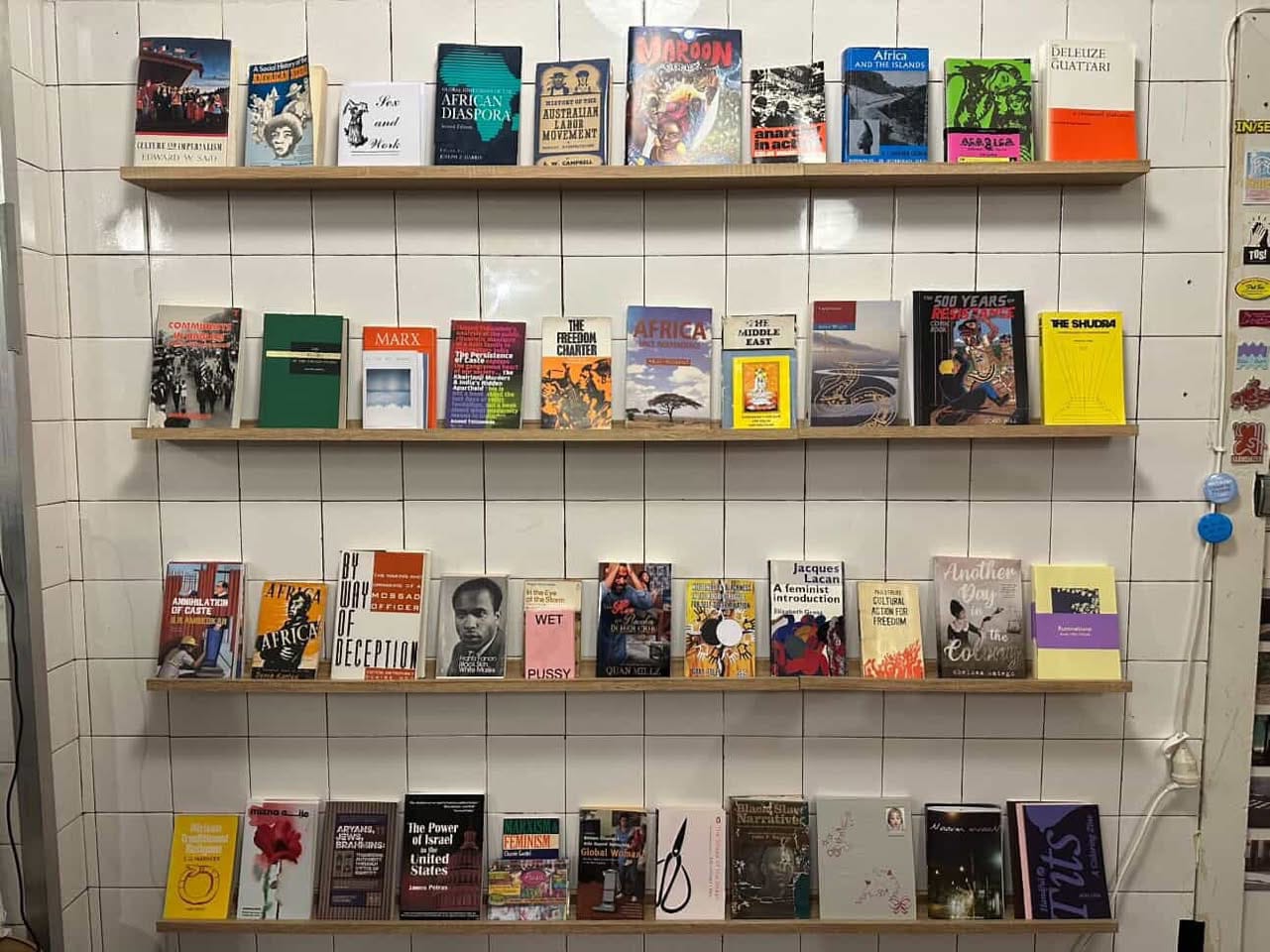
我是 Bona Obiri-Yeboah,Non-Aligned Books 的創辦人、執行總監及總編輯。Non-Aligned Books 是一間位於 Naarm/墨爾本 的獨立藝術書店,主要收藏與推廣關於非洲、非洲離散社群、階級鬥爭,以及全球南方相關的出版物。
我畢業於澳洲昆士蘭大學,主修國際關係與日文。求學期間,我逐漸意識到國際關係課程中存在許多缺口與既定立場,而這些經驗,至今仍持續影響著我的寫作,也影響著 Non-Aligned Books 的選書與策展方向。
我同時也是詩集《Ruminations》的作者。這是一本由 Cahyati Press 於 2024 年出版的小型詩集,收錄了一系列圍繞著浪漫愛、歸屬/不歸屬,以及黑人生命如何在殖民體制下穿行於一場破碎、恍惚、如發燒夢境般的現實之中的詩作。
Non-Aligned Books 的名字,來自於 「不結盟運動」(Non-Aligned Movement)。
這是一個誕生於 1955 年首次大規模亞非會議之後的國際運動,也是世界上規模第二大的國家聯盟。由於這場會議在印尼萬隆舉行,因此也廣為人知地被稱為萬隆會議。Non-Aligned Books 希望延續這段亞非團結的歷史。而正如你們接下來將會看到的,印尼對 Non-Aligned Books 的影響,不只是歷史性的,更深深存在於當代。
我想打造的是一個讓 Naarm/墨爾本 各個不同社群彼此交流、互相滋養,並建立團結的空間。我相信,團結並不是一個抽象概念,而是一種需要親身去實踐、去生活,並且持續不斷練習的行動。唯有當人們真正聚集在一起,理解彼此共同經歷過的歷史與抗爭,並因此彼此支持時,團結才能展現出最強大的力量。
基於我的個人背景,我也希望創造一個空間,讓非洲人能夠在閱讀中,看見自己存在於這個世界之中。在這裡,目前並沒有一間專門收藏非洲文學的書店。以因此讓我覺得自己必須創辦一間。因為我相信我們自己的故事所擁有的力量。我希望,能讓更多人閱讀、理解非洲、非洲離散社群、階級鬥爭,以及全球南方。
從一本小誌到一間書店
在 2024 年出版《Ruminations》後,你花了不少時間旅行並分享自己的作品。你曾提到,印尼的經歷深深影響了你,甚至成為 Non-Aligned Books 誕生的重要契機。可以和我們分享這段旅程嗎?書店的想法是如何萌生的?又為什麼在那個人生階段,你覺得「書店」是最適合的形式?
如果沒有親眼見證印尼對 DIY 出版的投入與承諾,我們就不可能真正理解獨立出版的力量,也不會相信它是如此真實且可行。
看到像 Kunci、Zine Zan Zun、TOS! Kecil、Hyphen—、Graphic Handler、Cahyati Press、Binatang Press 等研究團體與書店,透過出版說出自己的故事,對我而言是一件非常鼓舞人心的事情。
更重要的是,如果沒有這段經驗,我們也不會意識到:身處澳洲的非洲人,也應該用自己的雙手、自己的資源,去述說屬於自己的故事。因此,回到澳洲之後,我們決定,是時候讓過去五年持續進行的自出版工作,正式以 Non-Aligned Books 的形式建立起來。
對我們而言,將出版正式化這件事,是建立在社群(Community)之上的,也透過互惠來實踐。當我們將自己的出版工作正式建立起來,也是在邀請更多生活在澳洲的非洲人,看見自己故事原本就擁有的價值,以及屬於自身文化的自信。
你所收藏的出版物橫跨獨立出版、文化評論、反殖民思想,以及來自不同地區與社群的聲音。可以和我們分享,你成為一位書店策展人的歷程嗎?你是如何開始收藏這些出版物的?又有哪些相遇、哪些書,或哪些故事,形塑了你今日的選書方式?
嚴格來說,我成為書店策展人,是從今年一月底才正式開始的。
但如果要說我對選書與策展的熱情,那可以追溯到更早以前,大概是在青少年時期。很多公共的事物,其實都是從家裡開始的。我的藏書,也是如此。青少年時,我收藏了一小批私人書籍,都是我最喜歡的黑人作家與酷兒作家的作品。
我的父母知道我收藏黑人作家的書,但不知道我也收藏了同志作家的作品。當時我還沒有向他們出櫃,因此,那一整櫃書,成了我在家裡的一種微小抵抗。
它抵抗的是,生活在郊區核心家庭裡的日常。它抵抗的是,我從小被教導必須成為某一種「成功的人」的方式。我的書櫃,同時也抵抗著一種長久存在的觀念──非洲人彷彿不存在於知識之中,也不存在於歷史之中。
直到今天,在這個殖民國家裡,人們依然常常對我說:「你的英文竟然這麼好。」這對許多來自移民背景的人而言,都是一種共同的經驗,尤其是在澳洲,或其他以英語為主要語言的西方國家。因此,對我來說,閱讀,本身就是一種抵抗。閱讀也讓我能夠以自己微小的方式,超越許多限制、既定觀念與偏見。
正是從那時開始,我對書,以及各種不同類型出版物的熱情愈來愈深。慢慢地,收藏這件事,不再只是「擁有一本書」,而是一種抵抗。時間快轉十年。在自費出版我持續進行中的《Australia》小誌計畫,以及與 Cahyati Press 合作出版《Ruminations》之後,我開始參與各種藝術書展、小誌展等等。
我第一次覺得,自己的作品終於找到真正的讀者。
當我找到願意理解自己作品的人之後,我也開始慢慢建立各種關係。包括藝術書展、小誌展上的人們,以及 Northcote 的 library portal 志工。我目前收藏的大部分出版物,都來自 library portal。
除此之外,也有許多書來自二手書店、eBay、捐贈、Melbourne Art Book Fair、Sticky Institute 的 zine fair,以及未來更多不同的書展。我也邀請許多認識多年的朋友,把自己的出版物交給 Non-Aligned Books。因為現在很多書店之間競爭激烈,寄賣費也很高,使得許多新興創作者,甚至只是喜歡寫作、喜歡創作的一般人,都很難有機會讓自己的作品進入書店。
有一段相遇,我特別想分享。那就是我認識了 TOS! Kecil 的共同創辦人 Nia 和 Pras。我是在 2025 年雅加達的 Press Print Party Art Book Fair 首先認識 Nia。後來到了日惹,我把自己《Australia》小誌捐贈給 TOS! Kecil 店內圖書館時,又認識了 Pras。
認識他們兩位,給了我非常大的信心,也讓我相信,自己真的可以回到家鄉,開一間屬於自己的書店。
他們和我分享了許多經驗。例如:寄賣與買斷的差別;如何在藝術書展採購書籍,以降低國際運費;封面朝前與書背朝前的展示效果;店內燈光的選擇;以及最重要的,如何非常清楚且一致地維持一間書店的選書方向。
每一次和 Pras、Nia 長談之後,我總會再次被他們經營 TOS! Kecil 的不知疲倦、正直,以及開放的態度所鼓舞。雖然我成為書店策展人的旅程,起點來自自己的成長經驗,但它之所以能持續走到今天,更重要的是一路上與許多人建立了有意義、彼此滋養且互惠的關係。
我一直非常關注南南合作。也就是全球南方國家之間,在沒有西方國家或跨國企業介入的情況下,彼此合作。對南南合作的興趣,以及長期的研究,也進一步影響了我對反殖民思想與文化評論的關注。雖然我生活在全球北方,但我始終認為自己與全球南方有著深刻的連結。我希望 Non-Aligned Books 能夠持續延續亞非團結的歷史,並且以一種真實、具體且持續發生的方式,實踐更廣泛的南南合作。
你今年參與和舉辦了許多工作坊與社群活動,我們也注意到你特別關注小誌。你認為,小誌在今天為什麼仍然是一種如此有力量的形式?未來,小誌是否也會持續成為你出版計畫的重要部分?
小誌之所以具有力量,是因為,相較於一本書需要投入更多時間、金錢、勞力與承諾,任何人都可以製作一本小誌,而且可以獨立完成。小誌讓出版變得更加民主。從它的本質來說,小誌就是被設計來快速製作、快速分享的,不需要經過層層審核,也不需要一長串參與者共同完成。
這和「雜誌」很不一樣——事實上,小誌(zine)這個詞正是源自 雜誌(magazine),但雜誌通常需要漫長且繁複的出版流程。因此,我認為,小誌無論是它的名稱還是它的本質,都一直在試圖改革、挑戰既有的印刷出版模式。這件事對整個出版世界,以及 Non-Aligned Books 未來的出版計畫,都非常重要。
有許多故事、觀念與歷史,因為被認為太「激進」、「挑釁」或「敏感」,而無法透過主流出版社,或像書籍、雜誌這類主流形式出版。
誰有資格說故事?故事如何被講述?又如何被流通?這些事情,在今日的出版產業裡,都受到高度監控與規範。作為一間獨立書店,我們也不會站在大型出版社或國家利益那一邊。
我們想出版的是能夠回應這塊殖民地裡那些具有批判意識、卻長期被忽視的人們的出版物。而不是那些最能迎合大眾、最能創造利潤,或最能服務澳洲作為一個定居殖民國家利益的出版物。
小誌幫助我們實現這些目標。我們也希望,你們能和我們一起實現它。
家:一個無處(尚未)安放的地方
你不只是詩人,也是擁有穩定讀者群電子報的作者。幾乎每一期文章,你都會談到音樂、寫作、聲音藝術、出版,以及構成你生活的各種實踐。這些實踐對你而言意味著什麼?又是什麼將它們彼此連結起來?
我一直都對如何把各種看似毫不相關的知識與存在方式聚集在一起感到著迷。我第一次聽見這樣的想法,是在 bell hooks 2002 年於《Speaking Freely》節目中的一場訪談。對我來說,音樂、寫作、聲音藝術、出版,以及像 bell hooks 那樣的訪談,其實都是同一件事情,只是透過不同媒介表達。那就是:把反思與觀察轉化為藝術。
廣義來說,藝術是一切能夠展現技巧、想像力或情感力量的人類創造與行動。對我而言,藝術是透過技巧,去觸動人的情感與心理。我認為,把音樂、寫作、聲音藝術等不同的知識系統放在一起,讓我得以運用每一種媒介的不同技法,看見其中蘊含的情感力量。我也希望,在這個過程中,能夠把這些力量轉譯進出版,創造真正具有影響力的作品。
Non-Aligned Books 的許多面向,都和你的個人歷史、出生地與文化背景密切相關。你如何理解身份、記憶與地方之間的關係?
我一直努力以一種非常個人、非常具體明確的方式,去面對我所做的每一件事,以及每一次與人的相遇。我的阿姨——住在華盛頓特區、來自我母親家族——曾形容我是個非常有原則的人。我想,她說得沒錯,我對自己的原則非常堅定,也很固執。
我出生於千禧年之際的迦納阿克拉(Accra),父母在 Amasaman 努力工作,後來又帶著我移居澳洲,希望尋找更好的機會。這一路走來,造就了今天的我。我持續召喚這些個人歷史,不只是提醒自己來自哪裡,也讓它們成為我理解現在、指引未來的依據。
如果沒有歷史,我們還剩下什麼?對我來說,身份、記憶與地方,是彼此交織在一起的。在這個文化、語言與民族持續消失、甚至仍在被抹除的世界裡,它們讓我能夠保持扎根。
我也想藉這個機會,介紹一下 Non-Aligned Books 的 Logo。我們的 Logo 是和目前居住在墨西哥城、同時也是 N0 R3PLY Collective 共同策展人的平面設計師 Azul Bermudez 合作完成的。這也是我對南南合作持續投入的一部分。
更重要的是,這個 Logo 也代表了我們的出版方法。我們的方法,源自迦納 Akan 民族的說故事傳統。對我而言,回望非洲大陸尋找靈感與方向,是一種重新召喚自身歷史、象徵與文化語言的方式。
我們的 Logo —— Aya,是一種來自 Akan 民族 Adinkra 象徵系統中的蕨類植物,它象徵著在逆境中成長、克服困難、也象徵獨立。可以被理解為:「因為我佩戴 Aya,所以我不畏懼你。」或者更簡單地說:「我是獨立的。」
因此,選擇 Aya 作為 Logo,也代表我們希望將「獨立於外部利益與影響」這件事,放進 Non-Aligned Books 所做的一切之中。我們希望,在策展上保持自主,決定自己的命運。即使並不完美,也始終努力以有原則、負責任且追求正義的方式行動。
你認為,過去是否會一直存在於我們生命之中?我們是否需要改變它,才能繼續向前?而當你想到自己的家鄉與歷史時,你對它們在未來的位置抱持樂觀嗎?
我認為,過去會跟著我們到任何地方。世界上許多彼此從未接觸過的文化,都有鬼魂的概念。某種程度上,我覺得歷史就是一個鬼魂。它會一直糾纏著我們,直到我們真正面對它。
或者直到我們處理好那段歷史、那具遺體,使得那個靈魂終於得以安息。每一個人,都有屬於自己的歷史鬼魂。而許多人,至今都還沒有真正面對它。
我並不認為,歷史需要被改變,也不認為它能夠被改變。歷史僅僅存活、或說囚困於在那個歷史時刻裡。如果我們想繼續前進,就必須接受歷史本來的樣子。接受完整的歷史,而不是一段想像中的歷史,或是一段為了社會方便而被修飾過的歷史。
當我想到自己的家鄉與歷史時,我抱持著一點點的樂觀。雖然我出生於迦納,但我同時也深深感受到與它之間的疏離。這就是所謂的離散嗎?我的人生(我在地球的時光),一直在經歷各種被迫的流亡。離開出生地。離開自己的社群。以及離開所謂「正常異性戀人生」的流亡。
今天的迦納,在社會與經濟層面都充滿動盪。如果我明天搬回去,我可能很難真正被社會接納。因為,即使我看起來和大家一樣,但我的穿著、說話方式,以及我所愛的人,都和社會期待不同。
所以,我說自己只有一點點樂觀。因為我相信,人都有改變的可能。我和自己的故鄉,有著深刻的連結。但這份連結,也充滿疑問與不安。我知道我是誰,也知道自己來自哪裡。但我並不了解迦納,而迦納她也不了解我。
所以,也許這是一場對話。一場我和迦納之間,早就應該開始的對話。而現在,我已經準備好了。
最後...
在照片裡,我們看到《Is That You?》被貼在你的牆上。當初在書展上相遇時,是什麼吸引你帶走了這套明信片?
被吸引的契機,是因為很喜歡《SOME GUEI_SOME JING》中,「偽單人」前往歐洲旅行的故事。而在《Is That You?》這些作品拍攝的也是歐洲,是 Caspar 在旅途中偶然經過鏡頭前的帥哥們。
我很喜歡 Caspar 拍攝每一位男子時的方式。總是非常精準地構圖,把他們最自然、最真實的美感呈現出來。很多照片都拍攝於自然環境之中,像是在海邊,或是在樹林間。我覺得,這些場景進一步強化了作品裡自然與美所扮演的重要角色。
我也很喜歡《Is That You?》這個標題。它讓我開始思考:我是否能在這些男孩身上,看見自己?我是不是正在看著自己的某種樣貌?又或者,我只是陷入一種幻想,認為這些男孩可能曾經、或者其實就和我很相似?
我不知道。我唯一知道的是,在 Press Print Party 與《Is That You?》相遇的那一刻,它就像一面鏡子。而現在,每一次我再看見這些照片時,我都會忍不住對自己說:「Is That You, Bona……?」
謝謝你創作出這麼美麗的作品,Caspar。
大家來到 Non-Aligned Books,可以期待什麼?如果未來有人造訪墨爾本與你的書店,你想對他們說些什麼?
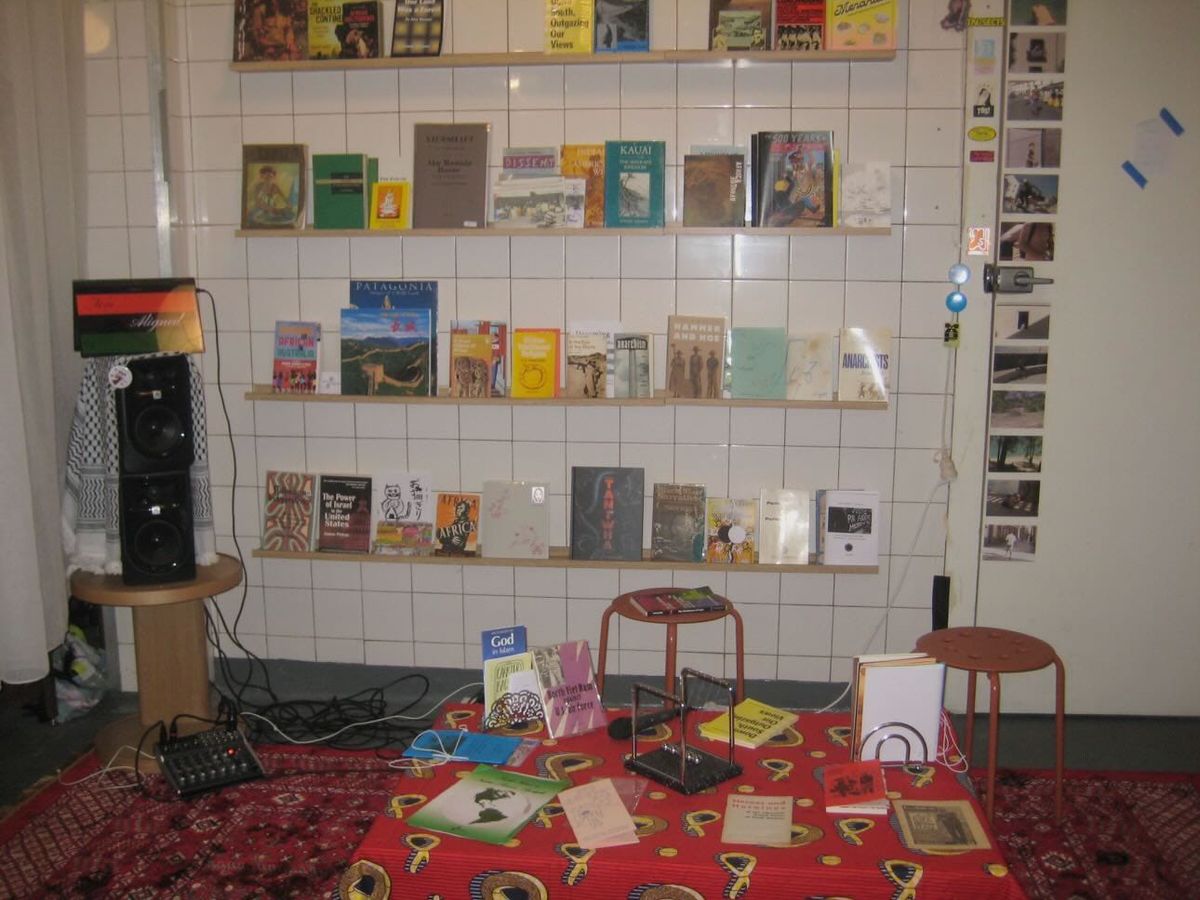
來到 Non-Aligned Books,你會看到大量關於非洲、非洲離散社群、全球南方,以及階級鬥爭如何與上述議題彼此交織的出版物。我把整個空間設計成一間客廳。一個適合反思、對話與歡笑的地方。
店裡有很多可以坐下來的地方,我也鼓勵大家直接坐在地板上。你會看到一張來自阿富汗的大地毯,它把整個空間串連在一起。
設計這個空間時,我參考了許多藝術書店,也希望它能反映全球南方許多家庭的生活方式。在那些空間裡,每一個人都是平等的。沒有人因為坐在椅子上,而高於其他人。大家都坐在地上、在同一個高度位置。這對我們非常重要,我們希望每一位來到這裡的人,都能感受到尊重,也同樣尊重他人。
我們相信,真正的尊重,不可能建立在階層制度之上。因此,不只是策展,在空間設計上,我們也希望所有人與所有觀點,都站在同一個位置。
對於未來,我想對所有來訪的人說:請保持開放。未來充滿未知,而我們唯一能為我們帶路的,是歷史。請帶著尊重、原則,以及一顆敞開的心走進 Non-Aligned Books。我們也會以同樣的方式,張開雙手迎接你。
如果有來自台灣的創作者,希望把自己的出版物寄賣到 Non-Aligned Books,你最期待收到什麼樣的作品?
目前,我們最期待收到簡單、溫柔,同時帶有提問性的作品。我們希望,看見作品如何將這三者融合,凝聚成一種真正的美。
你的作品可以是真實,也可以虛構;可以是小說,也可以是非小說;可以回朔到古老的過去,也可以是嘗試描繪一個尚未到來的未來。最重要的是,它必須具有意識,能夠引發對話,或觸動情感。
我們希望理解你的作品「帶來什麼感受」,而不只是它看起來如何、聽起來如何。投稿時,也歡迎說明你的材料、裝訂方式,以及製作時所使用的技術。此外,我們特別期待那些討論非洲與亞洲交會的作品。無論是歷史、社會、經濟,或數位層面的交會。這並不是接受寄賣的必要條件,但它確實是我們最關注的方向之一。
如果你想投稿,歡迎寄信至 nonalignedbooks@gmail.com 我們很期待閱讀你的作品。
謝謝 Guei 邀請 Non-Aligned Books 接受這次訪談。這對我而言意義重大,也非常珍貴。
懷著團結之心,
Bona
(en)
After two book journeys through Indonesia—Press Print Party in Jakarta in 2025 and Yogyakarta Art Book Fair in 2026—I returned to Taiwan full of cultural shock, and somehow, deeply stuck.
My first glimpse of Indonesia began in Jakarta. Yogyakarta took me somewhere deeper—into culture, into the distance between urban and rural life, and into other possible ways of living.
At Press Print Party, independent publishers and art bookstores from across Indonesia gathered in one place. Cahyati Press, travelling from Bali, went on to organise two book events in Jakarta: poetry readings, launches, authors gathering around one another. Community and self-publishing were not abstract ideas here. They were being lived. Their journey later continued to Australia, in support of Ghanaian-Australian author Bona Obiri-Yeboah—the person at the centre of today's conversation.
In Yogyakarta, amid book fairs, art festivals and biennales, I encountered two ideas rooted in Indonesian collective practice: Lumbung—sharing resources—and Nongkrong—the act of simply being together. Talking. Eating. Sitting around without a particular purpose. In these seemingly unproductive hours, trust gathers slowly. Knowledge passes between people. Something new begins to grow. These ways of living felt almost opposite to the capitalist world I knew, shaped by competition, comparison and the extraction of resources. I had lived inside that cycle for so long that I barely noticed it anymore.
Indonesia reminded me: I could choose again. Bona, too, arrived in Indonesia through self-publishing. Travelling across its islands with Cahyati Press, he found something that followed him home—and eventually took physical form in Australia as Non-Aligned Books. Bona is also the author of Ruminations (2024), and one of the writers I met at Press Print Party, simply because our tables happened to sit beside one another.We both returned home. Yet Indonesia continued to move through us, quietly tying our paths together. This conversation grew from there.
As this interview is published, however, Non-Aligned Books is facing the closure of its physical space after discovering that serious legal issues surrounding its use for retail had been concealed from them.
“...But we remain awash with hope for the future. ...The physical space is only one dimension of Non-Aligned Books. ...Non-Aligned Books is the concept, the community, the collection and our conviction that make it possible.”
These four Cs, written at the edge of a closure, read almost like a pulse—a small charge sent through those of us practising independent publishing, and perhaps through anyone working beneath the weight of larger systems while still insisting on hope.
In this conversation, we move through Bona's teenage years, his diasporic identity, his education, and the publishing journeys through Indonesia that continue to shape him.
10—or perhaps 100,000—questions from the curious minds of to_ press.
Here we go!
Hi, Bona! Tell us a little more about yourself and Non-Aligned Books! What kind of space are you building, and what do you hope it can become?
Hello!
My name is Bona Obiri-Yeboah, I am the founder, executive director and chief editor of Non-Aligned Books. Non-Aligned Books is an independent art bookstore in Naarm/Melbourne specialising in printed matter on Africa, its Diaspora, class struggle and the Global South. I hold a Bachelor of Arts in International Relations & Japanese from The University of Queensland. The gaps and agendas that I saw in my International Relations courses continue to inspire my own written work and now, the curation of Non-Aligned Books. I am also the author of Ruminations, a debut chapbook published by Cahyati Press in 2024. Ruminations is a collection of poems meditating on romance, (un)belonging and on moving through the fragmented fever-dream of black life in the colony.
Non-Aligned Books takes its name from the Non-Aligned Movement, a movement and the second-largest association of countries that came out of the first large scale Afro-Asian conference in 1955.
This conference is also popularly known as the Bandung Conference, as it was held in Bandung, Indonesia. Non-Aligned Books seeks to continue this history of Afro-Asian solidarity, and as you shall soon read, the influence of Indonesia for Non-Aligned is not purely historical, but also contemporary.
I am building a space for cross-pollination and solidarity between different communities in Naarm/Melbourne. I believe that solidarity is not just a concept, but it is something that you do, live and continually practice. Solidarity exists at its strongest when we are together physically, and when people can learn the struggles and histories they share and support each other because of that. I also wanted to create a space where African people can read themselves into the world. There is no dedicated bookstore here for African literature, so it was important for me to make one, because I believe in the power of our stories. I hope to encourage more people to read and educate themselves about Africa, its Diaspora, class struggle and the Globath South.
From a Zine to a Bookshop
After publishing Rumination in 2024, you spent a significant amount of time travelling and sharing your work. You've mentioned that your experiences in Indonesia had a strong influence on you and even played a role in inspiring Non-Aligned Books. Could you tell us about that journey, how the idea for the bookstore emerged, and why a bookstore felt like the right form for this moment in your life?
Without bearing witness to the commitment to DIY publishing in Indonesia, we would not have been able to envision the true effectiveness and feasibility of independent publishing.
It was deeply inspiring to see research collectives and bookstores like Kunci, Zine Zan Zun, TOS! Kecil, Hyphen—, Graphic Handler, Cahyati Press, Binatang Press and more express their stories in print. Further, without this exposure we would have not seen the value in telling our own stories as Africans living in Australia with our own hands and resources.
As a result, we came back to Australia and decided it was time for Non-Aligned Books to formalise the self-publishing we have been doing over the past five years. This process of formalising publications is grounded in Community and manifests in reciprocity. Formalising our own publications invites other Africans living in Australia to draw out the inherent value and cultural confidence in their stories.
The publications you collect span independent publishing, cultural criticism, anti-colonial thought, and voices from different regions and communities. Can you tell us about your journey as a bookstore curator? How did you begin collecting these publications, and are there any particular encounters, books, or stories that shaped the way you build your collection today?
My journey as a bookstore curator officially began this year at the end of January. However, my passion for curating books extends much beyond that, most likely to when I was a teenager. Many public things first begin in the home. My book collection was no different. As a teenager I kept a small, private collection of literature from some of my favourite black & queer authors. My parents knew about the black authors’ books I had but did not know I had books by gay writers. I had not come out to them as gay at that point, so I saw my book collection at home as a small form of resistance.
A resistance against living in the outer-suburbs in a nuclear family. Resistance against the ways I was taught that I had to perform in order to be successful. My home collection was also a resistance against the prevailing idea that African people are outside of knowledge or of history.
It was always and still is (sometimes) a ‘surprise’ to people in this colony that my English ‘is so good’, something that many people from migrant backgrounds may experience in Australia and other Western countries where the main language spoken is English. So for me, reading allowed resistance…and allowed for transcendence many of these limitations, concepts and prejudices in my own small way.
It was out of this that my desire for books and their innumerable genres deepened. Gradually, the process of collecting was more than just about possession, but it was resistance. Fast forward around a decade. After self-publishing my ongoing so-called “Australia” zine project and publishing Ruminations with Cahyati Press, I began to find myself involved in art book fairs, zine fairs and so on.
It felt like my work finally had the right audience.
Now feeling that I had the right audience to receive my work, I began the slow process of cultivating relationships with people at book/zine fairs, and volunteers at library portal in Northcote. I collect the majority of publications from library portal, but also many from second-hand bookstores, eBay, donations, the Melbourne Art Book Fair, Sticky Institute zine fairs and other fairs to come. I also invited long-time friends to share their printed matter with Non-Aligned Books, as many bookstores are competitive to stock publications in and also have high consignment fees that excludes emerging artists or just everyday people who like writing or making art from stocking their work.
One particular encounter that I would like to speak to is when I met Nia and Pras who are the co-owners of TOS! Kecil, an art bookstore in Yogyakarta. I met Nia first, at Press Print Party Art Book Fair in Jakarta (2025) and later, Pras in Jogja, when I donated copies of my so-called “Australia” zines to their in-store library.
Meeting Nia and Pras gave me a strong foundation and confidence that I could open my own bookstore back home.
They shared many tips on the difference between consignment and wholesale, acquiring books at art book fairs to avoid shipping costs, the effect of cover-facing shelves compared to spine-facing shelves, lighting choices and being very specific and consistent in the kinds of books they curate for the store. At the end of my many conversations with Pras and Nia, I am always reminded and motivated by their tirelessness, righteousness and openness in running TOS! Kecil.
While my journey as a bookstore curator has roots in my formative years, it has continued by cultivating relationships with people in a meaningful, nurturing and mutually beneficial way. I have a strong interest in South-South co-operation, that is, where countries in the Global South co-operate without a Western country or corporation present. This interest and ongoing study of South-South co-operation manifests itself in my interest in anti-colonial thought and cultural critique. While I live in the Global North, I still largely identify with the Global South. My hope for Non-Aligned Books is that we can continue to invoke the history of Afro-Asian solidarity and broader South-South co-operation in a real, physical and ongoing way.
You've organised and attended many workshops and community events this year, and we noticed a particular interest in zines. What do you think makes zines such a powerful format today? Do you see zine-making continuing to play an important role in your future publishing projects?
Zines are a powerful format because unlike a book, which requires more time, money, labour and commitment, anyone can make a zine and can make it by themselves. Zines make publishing democratic; by their very nature, zines are designed to be made and shared quickly, without oversight or a litany of contributors. This is unlike a magazine, from which zine takes its name, which typically requires a long and involved publication process. Thinking about how zines by their name and nature have sought to reform and challenge established modes of printing production is incredibly important for the publishing world and also Non-Aligned Books’ future publishing projects.
There are many stories, concepts and histories that are seen as too “radical”, “provocative” or “sensitive” to be published by mainstream publishers or in dominant formats, such as the book or magazine.
Who gets to tell the story, how the story is told and how it is distributed are all highly monitored and controlled by the publishing industry as it exists today and as it is classically understood. As an independent bookstore, we are also not aligned to the interests of large corporate publishers or the State.
We want to make printed matter that appeals to conscious and underrepresented people in this colony, not whatever will appeal to the widest audience, will turn the most profit or advance the interests of Australia as a settler-colony. Zines help us realise these objectives, and we hope you can realise them with us too.
Home: A Place Yet To Be Settled
You are not only a poet, but also the author of a newsletter with a growing readership. In almost every article, you write about music, writing, sound art, publishing, and the different practices that shape your life. What do these practices mean to you and what connects these different practices for you?
I have always been interested in bringing together various, and seemingly unrelated ways of knowing and being into the world. I first heard this phrase by bell hooks in her interview on the program, Speaking Freely, which first aired in 2002. Music, writing, sound art, publishing and interviews (like bell hooks’) are all different expressions via different mediums of the same idea: to transform reflection and observation into art.
Art is broadly defined as a diverse range of human creations and acts that express skill, imagination or emotional power. Art to me is harnessing technique with (usually) the intended outcome of moving people emotionally and psychologically. I think that drawing together these different ways of knowing and existing - music, writing, sound art, allows me to harness the different techniques of each medium to see the emotional power within them. Hopefully, in the process I can translate the power of each medium into publishing works that are impactful.
Many aspects of Non-Aligned Books seem closely tied to your personal history, birthplace (hometown), and cultural background. What do you think about the relationship between identity, memory, and place?
I always try to approach everything I do and every interaction I have in a deeply personal and specific way. My auntie (on my mother’s side) who lives in Washington D.C. describes me as a very principled person. I am unwavering and stubborn from my principles, so I think she is right.
Being born in Accra at the turn of the millennium to parents working very hard in Amasaman and being brought to “Australia” for better opportunities has brought me to where I am today. I continue to invoke this and other personal histories to make sure I remember where I come from, but also to guide and inform my present and future.
Without history…what do we have? The relationship between identity, memory and place are all intertwined for me. I see all three as equally important to feel grounded in a world where cultures, languages and peoples have been driven to extinction or are being actively erased.
I think this is a good time to also give some background on the logo of Non-Aligned Books. Our logo was designed in collaboration with Azul Bermudez, a graphic designer currently based in Mexico City, and a co-curator of N0 R3PLY Collective. This collaboration is a further reflection of my interest and commitment to South-South co-operation, as mentioned previously.
More broadly, our logo underpins our publishing methodology. Our methodology is rooted in the traditions of storytelling by the Akan people of Ghana.
As founder and director of Non-Aligned Books, this design choice is a way of looking back to the continent for inspiration and direction. In doing so, we invoke the history, symbology and cultural language of our people.
Our logo “Aya” is a fern that comes from the Adinkra symbols of the Akan people of Ghana. It symbolises the ability to thrive and overcome hardship. It also represents independence and can be interpreted to mean ‘I am not afraid of you because I wear this [Aya] as a charm or amulet,’ or simply, ‘I am independent’.
By using this specific Adinkra symbol, it is a way of embedding independence from outside interests and influence into everything Non-Aligned Books does. Our hope is for Non-Aligned Books to be sovereign in its curation, to self-determine our destiny and to act in a way that while imperfect, strives to be principled, accountable and just.
Additionally, do you believe that the past remains embedded within us throughout our lives? Does it need to be transformed in order for us to move forward? And when you think about your hometown and your own history, do you feel optimistic about their place in your future?
I think that the past lives with us everywhere we go. Many cultures around the world with no prior contact with each other have experiences with or have concepts of ghosts amongst them. In many ways, I feel that history is a ghost.
It haunts us until we reckon with it, or until we address and lay to rest the situation or body from which the soul that haunts us came. History is a ghost we all have, and many of us have not reckoned with it.
To move forward I don’t think history needs to or can be transformed. It simply lives in and is trapped in that historical moment. To move forward we need to accept history as it is, in its fullest form, not an imagined history or a socially convenient history.
When I think about my hometown and my own history, I feel a small optimism about their place in my future. Although I was born in Ghana, I feel deeply estranged from it. Is this what Diaspora means? Throughout my time on Earth I have been navigating various forms of induced exile. Exile from my birthplace, my community and also from “normal” heterosexual life.
The state that Ghana is in socially and economically is turbulent. If I was to move back to Ghana tomorrow, I would struggle to be accepted into society because although I look like everyone else, the way I present, the way I speak and who I love is different to what is expected.
So I say small optimism because I think all humans have the propensity for change. I feel a strong bond to where I come from, but this bond is also riddled with questions and insecurities. I am confident in who I am and where I come from, but I do not know Ghana and she does not know me.
So it’s a conversation, maybe. Between myself and Ghana. It is a conversation long overdue, but one I am ready to have.
At Final...
In the photo, our postcard Is That You? can be seen pinned to your wall. What drew you to this postcard set when we met at the book fair? (Full-hearted thankful for the support;> )
I was drawn to the postcard Is That You? Because I liked the story behind you travelling to Europe by yourself(SOME GUEI_SOME JING). And Is That You? were photographs of hot boys that passed by Caspar's camera lens.
It was great to see how Caspar framed each of the boys in his photographs so specifically, to draw out their natural beauty. Often, many of them are featured in a natural setting like next to the ocean or among trees and I thought this helped to re-inforce the role of beauty and nature in his work.
I also liked the title of Is That You? Because it made me wonder if I saw myself in any of these boys. Was I looking at versions of myself in these photos? Was it a delusion that any of these boys could have been or are like me? I don’t know. All I know is that in that moment when I interacted with the work at Press Print Party, these photos were like a mirror…and everytime I look at the photos I think to myself, “Is That You, Bona…?”
Thank you for making beautiful art, Caspar.
What can visitors expect from the launch of Non-Aligned Books, and is there anything you'd like to share with readers who may be visiting Melbourne and Non-Aligned Books in the near future?
Visitors to Non-Aligned can expect a wide catalogue of books focusing on Africa and its Diaspora, but also on the Global South and how class struggle intersects with all of that. I’ve designed the space as a living room. A place for reflection, conversation and joy.
There are many places to sit, and visitors are encouraged to sit on the floor, where you will find a large rug from Afghanistan that brings our store together. When thinking about the set design based on other art bookstores and how I wanted the store to feel, it was important to me to reflect many of the living spaces in the Global South. These spaces make everyone equal, in that…no one is above another by sitting on chairs because people are pulled to sit on the ground. To be on the same level.
This is important because we want everyone to feel respected and to extend that respect in equal measure to others. We feel that this cannot be done if we operate on a hierarchy model. In not just our curation, but also store design we want concepts and people to be on the same level.
For the future, I would like to share with readers who may visit to be open-minded. The future is unknown, and we only have history to guide us. Come with respect, principle and an open heart and Non-Aligned Books will reciprocate that to you with both hands.
If authors from Taiwan were interested in distributing or consigning their publications through Non-Aligned Books, what kinds of projects would you be most excited to receive?
At the moment, we would be most interested to receive works that are simple, gentle and interrogative. Non-Aligned Books is looking for work that brings these three ideas together: simplicity, gentleness and interrogation to distill them into a work with beauty.
Your publications can be fiction or non-fiction, real or fake, seen or unseen. It can span far back into ancient times or attempt to predict a future none of us have seen yet. What is most important though, is that the work is conscious and provokes conversation or an emotional response. We want to have an idea of how your work feels, not only looks or sounds. Include in your description the materials, binding methods and other techniques used to create your publication.
In addition to this, we are most excited and committed to works that speak to how Africa and Asia intersect. This can be historically, socially, economically or digitally. It is not a requirement for your work to speak to this to be accepted for consignment or distribution, but it is a core interest of ours, so it is something to keep in mind.
If you would like to submit your work to us, please send an email to us through nonalignedbooks@gmail.com and we would be happy to take a look.
Thank you for inviting Non-Aligned Books for this interview Guei, it means a lot and is very special.
Yours in solidarity,
Bona
Bona Obiri-Yeboah and his bookstore Non-Aligned Books
Interview by Guei/to_ press
Photo credit by Bona Obiri-Yeboah